Research and Innovation at RTC-CALABARZON

Explore how TESDA Regional Training Center – CALABARZON supports applied research, innovation, and knowledge-sharing that strengthen technical-vocational education, training delivery, and workforce readiness across the region.

Students and researchers collaborating in a laboratory setting
Overview

Research that supports skills development

Our research initiatives help inform training quality, curriculum relevance, assessment practices, and institutional improvement. The page serves as a space to highlight studies, innovation efforts, and evidence-based practices that contribute to responsive and industry-aligned technical education.

Applied studies

Research activities may focus on training methods, learner outcomes, technology use, community needs, and labor market relevance.

Knowledge sharing

Findings can support planning, program enhancement, partnerships, and continuous improvement across education and training services.

Training innovation

Studies that examine effective teaching strategies, learning environments, and delivery models for technical-vocational education.

Learn More

Assessment and quality

Research that supports competency assessment, quality assurance, and evidence-based improvement of training systems and services.

Learn More

Industry relevance

Projects that explore workforce trends, local needs, and partnerships that help align programs with employment opportunities.

Learn More
Research

Research for skills development

RTC-CALABARZON conducts research activities that support evidence-based training, assessment, and institutional planning. These efforts help the center respond to learner needs, labor market trends, and community priorities.

Research work may include completed studies, ongoing inquiries, tracer-related reviews, training delivery assessments, and community-based investigations that guide program enhancement and service improvement.

By documenting findings and translating them into action, research helps strengthen curriculum relevance, improve training outcomes, and support local development through practical technical-vocational education.

0
Training quality
0
Community needs
0
Industry relevance
0
Program improvement
Studies

Completed and ongoing studies

The following completed researches conducted by RTC-CALABARZON highlight innovation, instructional improvement, equipment assessment, agricultural systems development, and training effectiveness.
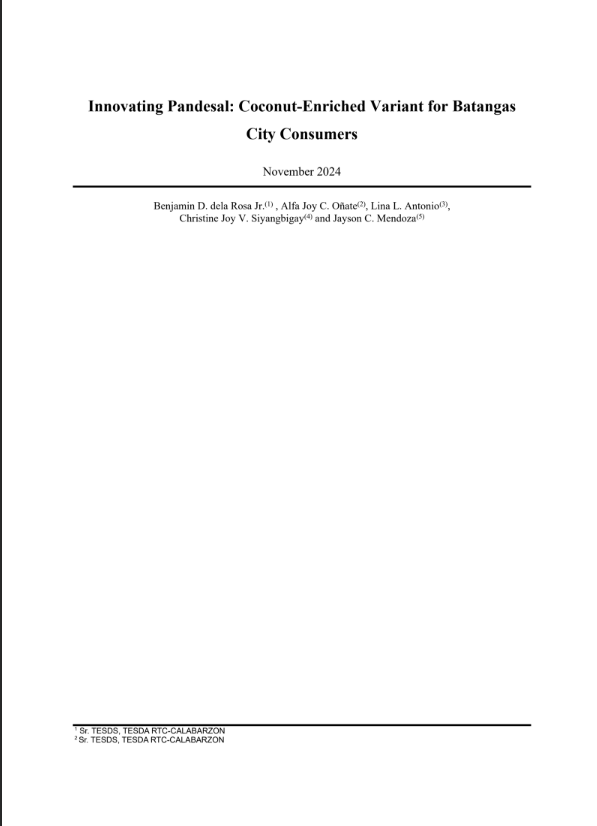
Thumbnail for Innovating Pandesal: Coconut-Enriched Variant for Batangas City Consumers

Innovating Pandesal: Coconut-Enriched Variant for Batangas City Consumers โ€” November 2024 โ€” Benjamin D. Dela Rosa

Thumbnail for Acceptability of the Improvised Pipe Hanger as an Instructional Tool Among TESDA Trainers and Learners

Acceptability of the Improvised Pipe Hanger as an Instructional Tool Among TESDA Trainers and Learners โ€” October 2023 โ€” Christian Benedick

Assessment of Equipment Adequacy and Training Resource Gaps in Pipefitting NC II research thumbnail

Assessment of Equipment Adequacy and Training Resource Gaps in Pipefitting NC II at TESDA RTC CALABARZON โ€” March 2023 โ€” Christian Benedick M. Alvarez

Design and Fabrication of a Cost-Effective Improvised Pipe Hanger for Pipefitting (Metallic) NC II Learners in TESDA RTC CALABARZON thumbnail

Design and Fabrication of a Cost-Effective Improvised Pipe Hanger for Pipefitting (Metallic) NC II Learners in TESDA RTC CALABARZON โ€” July 2023 โ€” Christian Benedick M. Alvarez

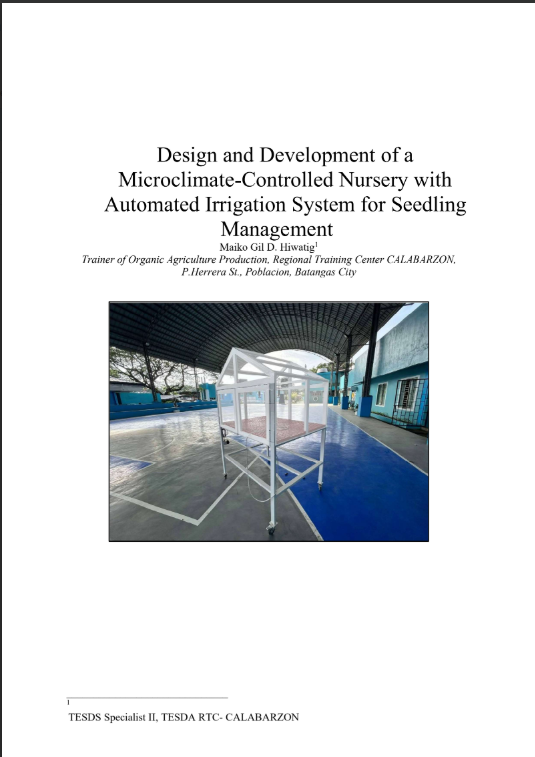
Thumbnail for Design and Development of a Microclimate-Controlled Nursery with Automated Irrigation System for Seedling Management

Design and Development of a Microclimate-Controlled Nursery with Automated Irrigation System for Seedling Management โ€” Maiko Gil D. Hiwatig

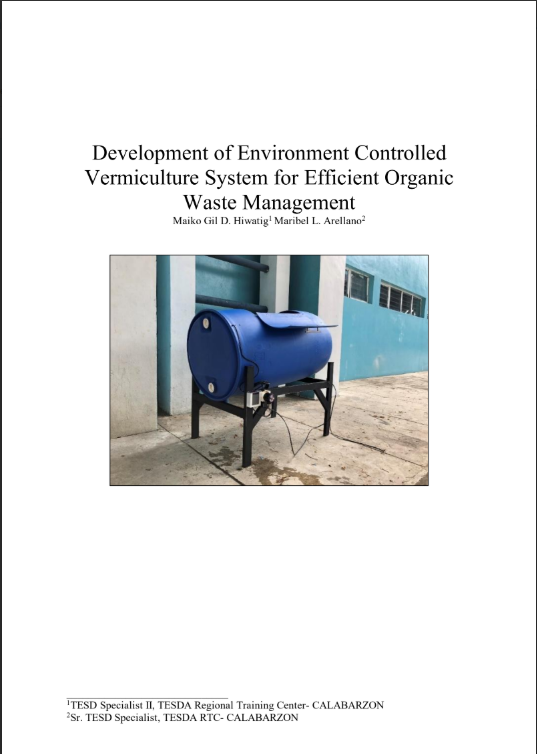
Thumbnail for Development of Environment Controlled Vermiculture System for Efficient Organic Waste Management

Development of Environment Controlled Vermiculture System for Efficient Organic Waste Management โ€” Maiko Gil D. Hiwatig

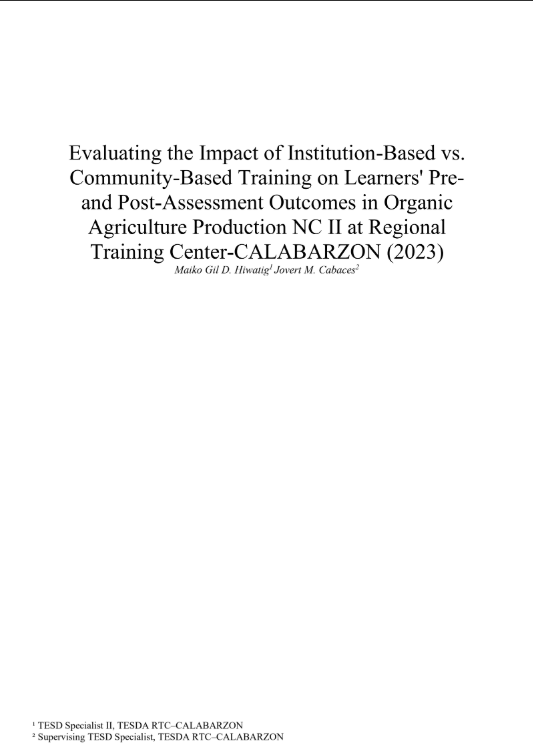
Thumbnail for Evaluating the Impact of Institution-Based vs. Community-Based Training on Learners' Pre and Post-Assessment Outcomes in Organic Agriculture Production NC II at Regional Training Center - CALABARZON (2023)

Evaluating the Impact of Institution-Based vs. Community-Based Training on Learners’ Pre and Post-Assessment Outcomes in Organic Agriculture Production NC II at Regional Training Center – CALABARZON (2023) โ€” Maiko Gil D. Hiwatig

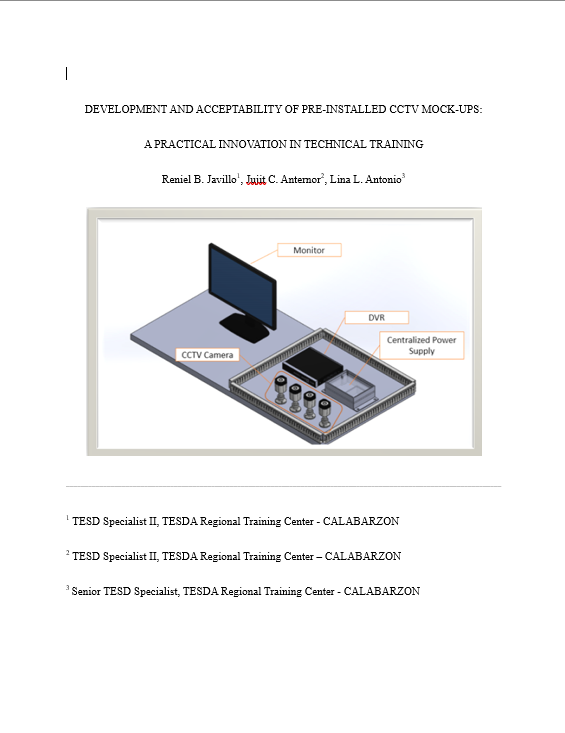
Development and Acceptability of Pre-Installed CCTV Mock-Ups

Development and Acceptability of Pre-Installed CCTV Mock-Ups: A Practical Innovation in Technical Training โ€” November 2022 โ€” Reniel B. Javillo

Technical vocational training classroom with instructor and students
Focus Areas

Key focus areas and outcomes

Training delivery

Studies examine teaching methods, facilities, tools, and learner engagement to improve the quality of instruction.

Assessment and certification

Research supports better assessment practices, competency validation, and alignment with standards.

Industry and labor trends

Findings help identify in-demand skills and guide program offerings toward employment opportunities.

Community development

Research informs outreach, extension, and local capacity-building efforts that benefit communities.

How research supports training and community development

Research helps RTC-CALABARZON make informed decisions on curriculum improvement, resource planning, learner support, and partnership development. It also provides useful evidence for community-based programs, helping ensure that training remains responsive, practical, and aligned with regional development needs.